Story · Dynasties
The Fords: keeping the votes
A buyout, a foundation and Class B shares keep the founder's family in charge
Buying out the other shareholders
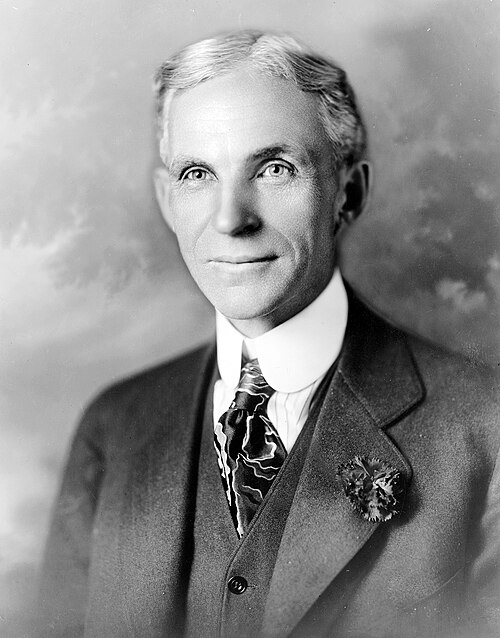
Henry Ford's company was incorporated in 1903 with outside investors. By 1916 it had a surplus of 60 million dollars, and Ford, its president and majority shareholder, wanted to stop paying special dividends and spend the money on new plants and lower prices. The Dodge brothers, who owned 10 per cent, sued, and in 1919 the Michigan Supreme Court ordered an extra dividend of 19.3 million dollars. Ford then set out to be rid of minority shareholders altogether. He handed the presidency to his son Edsel, threatened to start a rival company, and he and Edsel then bought out every other investor.
Sources: Dodge v. Ford Motor Co. · Henry Ford
A foundation and the tax man
Edsel was president from 1919, but his father kept the final say and often overruled him; only falling sales forced the replacement of the Model T by the Model A in 1927. Edsel's lasting move was financial. On 15 January 1936 he and two executives set up the Ford Foundation, partly in response to a 1935 tax reform that imposed a 70 per cent tax on large inheritances. After Edsel and Henry died, the foundation held 90 per cent of Ford's non-voting shares, while the family kept the voting shares. The company passed down the generations without the family losing control.
Sources: Ford Foundation · Edsel Ford
The grandson returns
Edsel died of cancer in May 1943, aged 49, leaving his non-voting stock to the foundation. The ageing founder took back the presidency, and the company started losing about 10 million dollars a month; President Roosevelt's administration even considered taking it over to protect war production. Edsel's eldest son, Henry Ford II, left the navy in 1943 and became president on 21 September 1945, with little preparation. He removed his grandfather's inner circle, including the security chief Harry Bennett, hired the former General Motors executive Ernest Breech, and recruited ten young statisticians known as the Whiz Kids, among them Robert McNamara.
Sources: Henry Ford II · Edsel Ford
Going public, keeping the votes
The foundation, by now set to become the largest in the world and based in New York, wanted to diversify, and between 1955 and 1974 it sold all its Ford shares. That sale is what made Ford a public company. The first offering, in 1956, raised 650 million dollars. But the family's voting shares were kept as a separate Class B stock. The family owns all of it, and it elects 40 per cent of the board, while ordinary shareholders elect the other 60 per cent. Henry Ford II, who had led the foundation in the 1940s, resigned as a trustee in 1976, unhappy with its direction.
Sources: Ford Foundation · Ford family · Henry Ford II
Twenty years without a Ford
Henry Ford II ran the company for more than three decades, as chief executive from 1945 to 1979 and chairman from 1960 to 1980. He hired Lee Iacocca, the force behind the Mustang, and fired him in 1978 after a personal falling out. He retired from all posts in 1982 at the company's mandatory age of 65 but remained its ultimate authority until he died in 1987. For the next twenty years, outsiders managed Ford. The family's interests were watched on the board by Henry's younger brother William Clay Ford Sr., his son Edsel Ford II and his nephew William Clay Ford Jr.
Sources: Henry Ford II
Bill Ford's bet
William Clay Ford Jr., known as Bill, became chairman on 1 January 1999 and added the chief executive's job in October 2001 after Jacques Nasser was pushed out, the first family member to run Ford since his uncle retired. The company was struggling, and in September 2006 Bill handed the chief executive role to Alan Mulally, a Boeing executive, staying on as executive chairman. In December 2006 Ford raised its borrowing capacity to about 25 billion dollars, pledging substantially all its assets as security. It lost 12.7 billion dollars that year, but in the crisis of 2008 to 2010 Ford, unlike its two big American rivals, did not need a government rescue.
Sources: William Clay Ford Jr. · Ford Motor Company
A minority with the most votes
Today the Ford family owns a minority of the company's shares but holds a plurality of the voting power, through the Class B stock created early in the company's history and kept at the 1956 listing. That arrangement has let the family keep a Ford at the top long after it stopped owning most of the business: Bill Ford has been executive chair since 1999. The family has also returned to the charity that once held its shares. In 2019 Henry Ford III joined the Ford Foundation's board, the first family member to serve since his grandfather resigned in 1976.
Sources: Ford Motor Company · Ford family · Ford Foundation · William Clay Ford Jr.