Story · People
Preston Tucker and the car of tomorrow
A born salesman raises millions for a radical car, builds 51 and wins in court
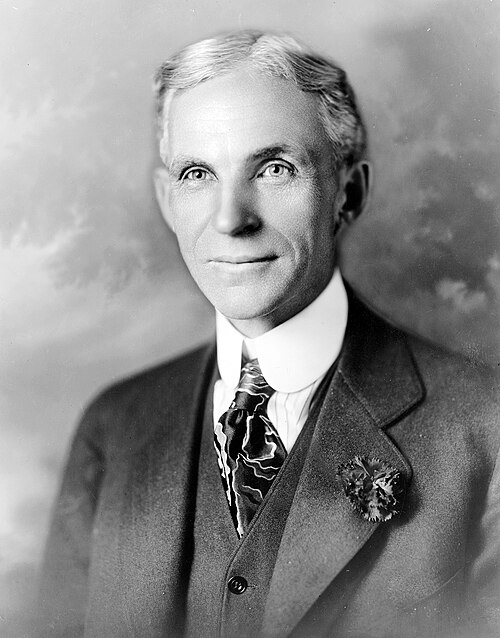
A salesman who loved speed
Preston Tucker was born in 1903 on a peppermint farm in Michigan and grew up near Detroit. He left school to be an office boy at Cadillac, worked on the Ford assembly line and found his real talent selling cars, rising to regional sales manager for Pierce-Arrow in 1933. Each year he spent a month at the Indianapolis Motor Speedway, where he befriended Harry Miller, the leading builder of Indianapolis 500 engines. In 1935 they formed Miller and Tucker, Inc. Its first job, ten racing cars for Henry Ford, went badly: the steering boxes overheated and every car dropped out of the race.
Sources: Preston Tucker
War contracts that slipped away
From a machine shop in a converted barn in Ypsilanti, Michigan, Tucker chased military work. He designed a fast armoured car for the Dutch government, which lost interest after Germany invaded the Netherlands in 1940; the US Army rejected it too. Its power-operated gun turret interested the Navy, but his patent and royalty rights were confiscated and he spent years in lawsuits. In 1940 he formed Tucker Aviation Corporation, a public company that sold stock to develop a fighter, the XP-57, but money ran short and the contract lapsed. In March 1942 the boatbuilder Higgins Industries bought the firm and made Tucker a vice-president in New Orleans. He left in 1943.
Sources: Preston Tucker
The car of tomorrow
After the war, Americans wanted new cars, but the big three Detroit makers had designed nothing new since 1941. Tucker saw an opening for a small independent and planned a car built around safety and modern styling: a rear engine, a padded dashboard, a windscreen designed to pop out in a crash, a frame to protect occupants from side impacts, and a central third headlight that turned with the steering. He hired the stylist Alex Tremulis on 24 December 1946 and gave him six days to finish the design. Newspaper advertisements in March 1947 created huge public excitement, well before a prototype existed. Several promised features, such as disc brakes and fuel injection, were later dropped.
Sources: Preston Tucker · Tucker 48
Selling a car before building it
Tucker leased the vast Dodge aircraft engine plant in Chicago from the War Assets Administration in July 1946, on condition that he raised 15 million dollars by March 1947. A 20 million dollar share issue was handled by the Chicago broker Floyd D. Cerf. He sold more than 2,000 dealerships at 7,500 to nearly 30,000 dollars each. Through an accessories programme, buyers paid for items such as radios and seat covers in return for a place on the waiting list for a car. By 1947 the Tucker Corporation had over 17 million dollars in the bank, and it paid 1.8 million for an engine maker, Air Cooled Motors, to secure supply.
Sources: Preston Tucker · Tucker 48
The SEC moves in
The Securities and Exchange Commission watched small car start-ups closely, and the accessories programme triggered a formal investigation. In September 1947 the company's chairman resigned and wrote to the SEC objecting to how Tucker used money raised from the public. A radio broadcaster mocked the prototype as the tin goose because it could not reverse. Dealers sued to recover their money and the share price fell. In February 1949 a grand jury investigation began; on 3 March a federal judge handed control of the company to trustees, and production stopped. In June Tucker and several associates were indicted on charges of mail fraud, breaching SEC rules and conspiracy to defraud.
Sources: Preston Tucker · Tucker 48
Not guilty, but finished
The trial opened on 4 October 1949, the day the factory closed. Only 37 cars had been built; loyal staff finished 13 more. Prosecutors argued Tucker never meant to make a car. Their final witness, an SEC accountant, said the company had taken in over 28 million dollars and spent less than a seventh of it on developing the car, but under cross-examination agreed he was not exactly saying the money had been taken fraudulently. The defence called no witnesses, and had pointed out that Kaiser-Frazer took large government loans yet was never indicted. On 22 January 1950 the jury acquitted every defendant on all counts. The company, without a factory and buried in debt and lawsuits, was effectively dead.
Sources: Preston Tucker
Legacy of the Tucker 48
The company's assets were auctioned in Chicago. Tucker tried again in the early 1950s with Brazilian investors and a sports car called the Carioca, but it was never built, and he died of pneumonia, a complication of lung cancer, in December 1956, aged 53. Whether the venture was a real car company or a scheme to collect money is still argued; supporters point to its 1,900 employees and a huge archive of engineering drawings. The 51 cars, counting the prototype, became prized collectors' items: one sold for 2.915 million dollars at auction in 2012. Francis Ford Coppola, himself a Tucker owner, told the story in the 1988 film Tucker: The Man and His Dream.
Sources: Preston Tucker · Tucker 48