Story · Rivalries
Apple against Samsung
The smartphone's two leaders were supplier and customer, then fought in court
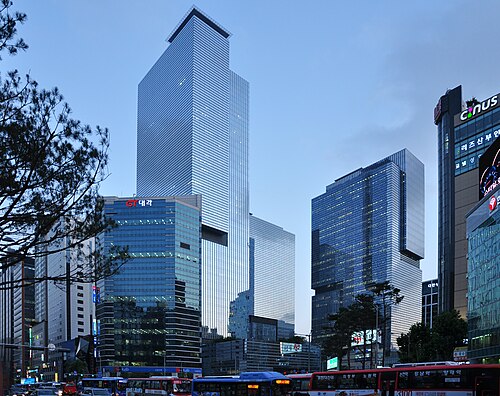
Samsung inside
Before they were rivals, Samsung was one of Apple's suppliers. In 1993 the Samsung chairman Lee Kun-hee had cut weak product lines and pushed the company into designing and making components for other firms, while trying to shed its image as a budget brand. It became the world's largest maker of memory chips that year, and in 2005 it sealed a deal to supply Apple with memory chips. The processors in the first three iPhones were Samsung designs. Apple's own first chip, the A4 of 2010, which went into the first iPad and the iPhone 4, was designed by Apple but still made in Samsung's factories.
Sources: Samsung Electronics · Apple A4
The iPhone and the Galaxy S
On 4 January 2007, days before Steve Jobs unveiled the iPhone, Apple filed four design patents on the phone's basic shape, and that June it filed another covering 193 screens of the iPhone's software. Samsung was already a big phone maker, second only to Nokia by the late 2000s, with no answer yet to the iPhone. Samsung's answer, the Galaxy S, ran Google's Android software and launched in June 2010 in South Korea and parts of Asia, reaching the United States in July, where it sold more than a million in 45 days. By late 2010 Samsung had about 22 per cent of all phone shipments worldwide.
Sources: Apple Inc. v. Samsung Electronics Co. · Samsung Electronics
Suing a supplier
On 15 April 2011 Apple sued Samsung in California, claiming that its Galaxy phones and tablets copied the iPhone and iPad, from rounded corners to app icons. Samsung was also one of Apple's own component suppliers. Some of the side-by-side pictures Apple gave the court were later found to have been altered to make the devices look more alike. Samsung answered within a week with suits in South Korea, Japan and Germany, then in Britain and Delaware. By late 2011 the two were fighting about twenty cases in ten countries. In the third quarter of that year Samsung overtook Apple in smartphone sales worldwide.
Sources: Apple Inc. v. Samsung Electronics Co. · Smartphone patent wars · Samsung Electronics
A billion dollars, and an apology on a website
In August 2012 a California jury found that Samsung had wilfully copied features such as the bounce-back scrolling effect, tap to zoom and the iPhone's rounded shape, and awarded Apple $1.049 billion. Elsewhere Apple fared worse. A Seoul court that same month found each side had infringed the other's patents and rejected Apple's claim that Samsung had copied the iPhone's design; a Tokyo court ruled for Samsung; and in Britain Apple was ordered to state on its own website that Samsung's tablets had not copied the iPad. The American damages were later cut, to $290 million in 2013, before being set at $539 million in 2018.
Bigger screens, two chip suppliers
Each side adjusted. Samsung was the world's largest phone maker from 2012 to 2022 and pioneered very large phones, the so-called phablets, with its Galaxy Note line. In September 2014 Apple launched the iPhone 6 and 6 Plus, with screens much larger than any iPhone before. Apple also reduced its dependence on its rival. Its A9 chip of 2015, used in the iPhone 6s, was made by both Samsung and the Taiwanese foundry TSMC; tests soon suggested that phones with the Samsung-made version had shorter battery life under heavy use, which Apple said made little difference in normal use.
Sources: Samsung Electronics · IPhone · Apple A9
The Supreme Court and a settlement
The first American case reached the Supreme Court. In December 2016 it ruled 8 to 0 that the article of manufacture on which design damages are based need not be the whole phone but could be a part such as the case or screen, and sent the case back to a lower court. In a second case, a jury in 2014 awarded Apple $119.6 million, which The Guardian called a pyrrhic victory: Apple had asked for more than ten times as much and may have spent more on lawyers than it won. In June 2018 the two companies settled their American disputes on undisclosed terms.
Volume against profit
The fight left a market with two leaders and two different models. By 2024 Apple and Samsung together made about 40 per cent of all smartphones sold. Samsung sells more phones, with about 21.8 per cent of the world market against Apple's 15.6, across a range from cheap to premium. Apple sells fewer, mainly expensive models, yet takes nearly half of global smartphone revenue and about 80 per cent of the industry's profits, with Samsung taking the remaining 20. Samsung still makes semiconductors, image sensors, camera modules and display panels for other companies, including Apple, and in 2018 it passed Intel as the world's largest chipmaker.
Sources: Apple Inc. v. Samsung Electronics Co. · IPhone · Samsung Electronics